
Everyone Owns a Piece. Who Owns the Solution?
Why integration may become one of the defining challenges in scaling paper-based packaging
By Claudio J. Muñoz — Founder, Partners64
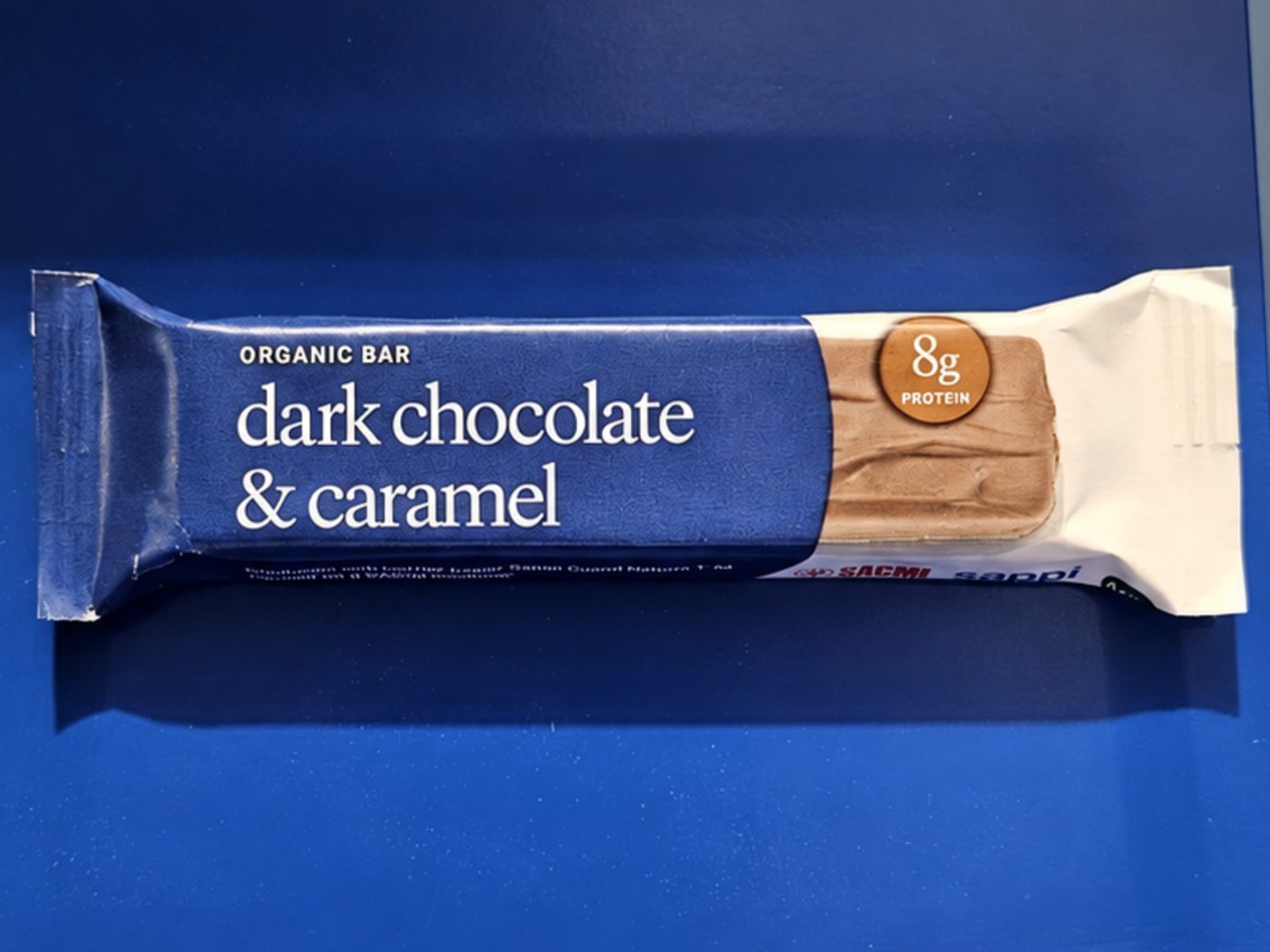
Over the past several years, I've collected a small pile of packaging samples from trade shows in Europe and North America — most of them because something about the material, barrier technology, converting process, or design caught my attention.
Looking through them again recently, I noticed a different pattern. Many carry multiple company logos on the same package. One combines Mondi, Rovema, and Videojet. Another brings together UPM, Michelman, Siegwerk, and BOBST. Others connect Sappi with SACMI, Graphic Packaging with Mondini and Bernucci, or Mondi with Hugo Beck.
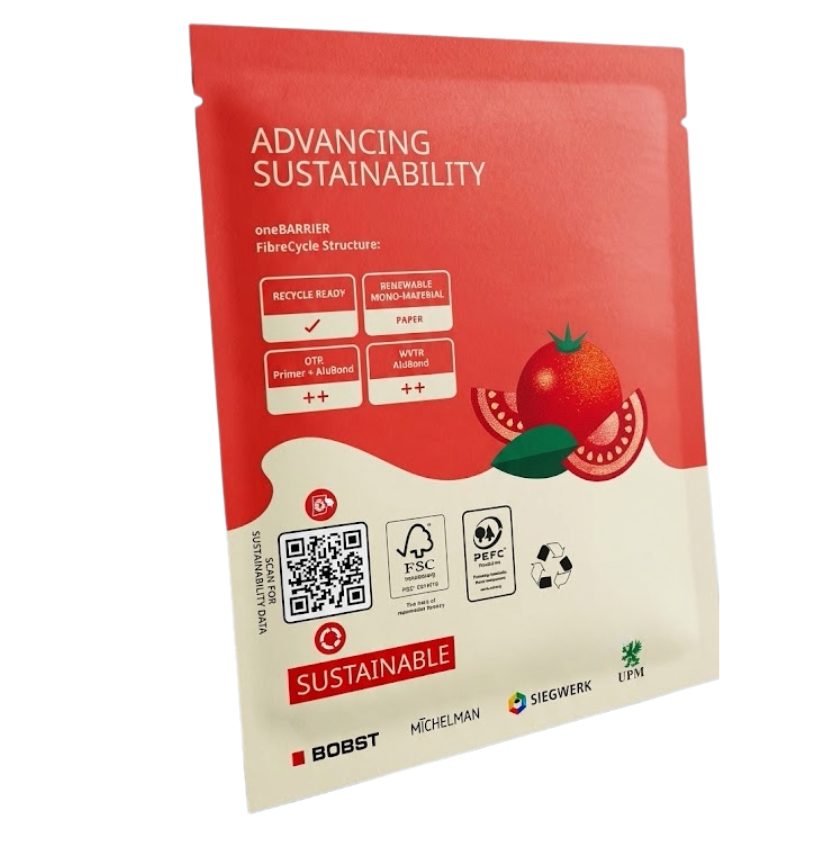
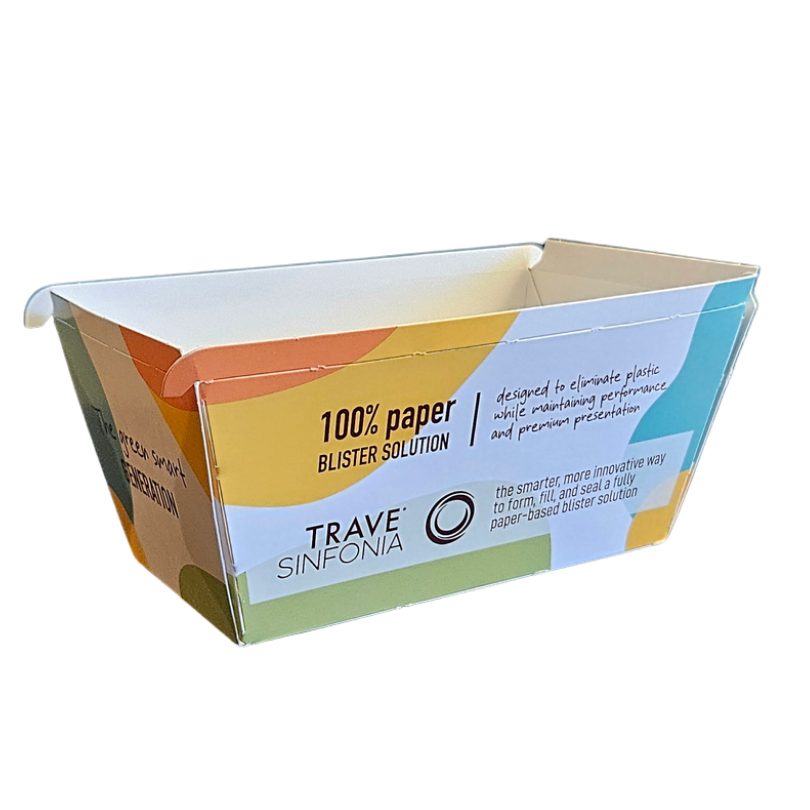
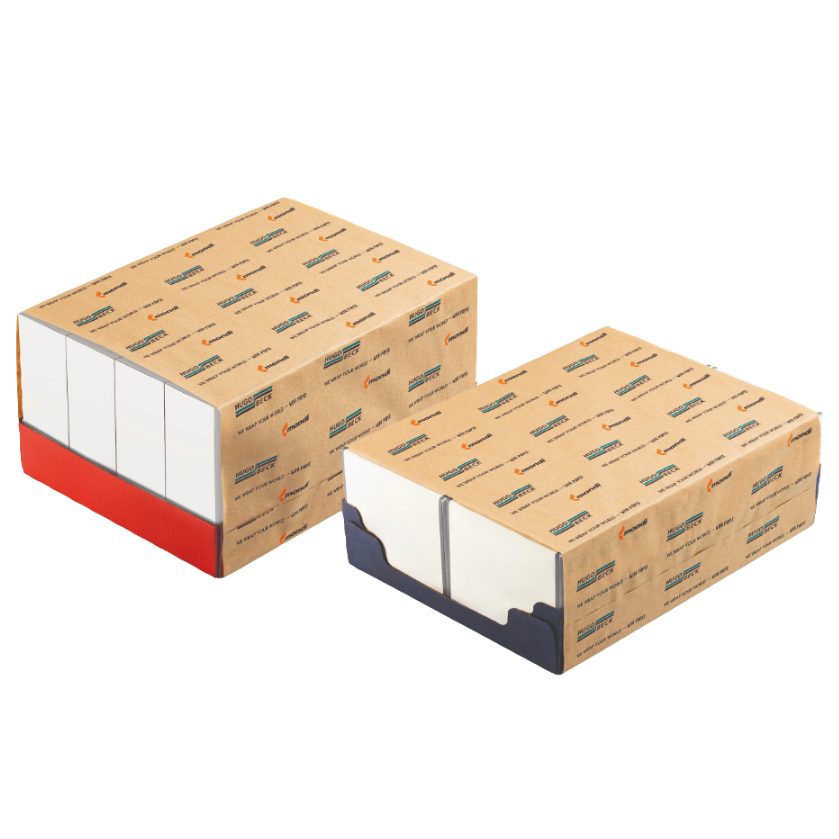
There's nothing unusual about that — quite the opposite. They represent some of the best technical work in the industry: replacing packaging structures with decades of development behind them takes real expertise across paper science, chemistry, coating, printing, converting, and machinery.
But seen together, the samples raise a more strategic question: if it takes several highly capable companies to build the package, who owns the performance of the whole solution? That question matters more each year, as paper-based packaging moves from demonstration toward real commercialization.
We've Made Enormous Progress on Individual Technologies
For a long time, the debate over replacing plastic with paper was mostly about technical feasibility: could paper deliver enough moisture and oxygen barrier, resist grease and mineral-oil migration, seal reliably, and run on equipment built around very different mechanical properties?
Those questions haven't disappeared — some applications remain genuinely hard, especially where high barrier, long shelf life, aggressive filling, or high line speeds are involved. But the industry has made real progress: chemical suppliers like Michelman, BASF, and Kuraray have developed increasingly sophisticated coatings and barrier systems, and paper producers — Mondi, Sappi, Billerud, Stora Enso, UPM, Metsä, and others — have invested heavily in substrates built specifically for these applications. Converting and coating technology has improved too, and machinery companies are learning to handle materials that behave nothing like the plastic films their equipment was designed around.
That's why trade shows are full of impressive paper-based prototypes and demonstrations — the technology is real. But proving individual technologies work is different from making them work together, every day, at commercial scale. That's where the next major challenge sits.
Packaging Is a System, Not a Collection of Technologies
A brand owner doesn't need a barrier coating, a particular base paper, a coating method, or a sealing technology. They need a package that works — one that protects the product for its shelf life, runs reliably through manufacturing, holds appearance and print quality, survives distribution, meets regulatory and sustainability requirements, and does all of it at an acceptable cost.
That expertise is scattered across companies with very different capabilities and business models: a paper producer optimizes fiber composition, formation, strength, and cost per ton; a chemical supplier focuses on barrier performance, coating rheology, adhesion, and regulatory compliance; a converter has to apply, print, laminate, or metallize those materials consistently at scale; and the equipment manufacturer has to make the material form, fold, feed, seal, cut, and run at a speed that makes economic sense — where variations that looked trivial in development can suddenly matter a great deal.
None of these companies is doing anything wrong. The finished package simply doesn't care where one supplier's responsibility ends and the next one's begins. It either works or it doesn't.
The Interfaces Matter as Much as the Individual Technologies
Some of the hardest problems in commercializing these materials live at the interfaces, not inside any one technology. Paper formation and porosity affect coating holdout and penetration; surface chemistry affects how a functional layer wets and anchors; coat weight affects barrier performance, cost, and converting behavior. Stiffness, elongation, tear behavior, and moisture response all affect how the material moves through converting and packaging equipment — a structure that performs beautifully in barrier testing can still struggle during forming, and a coating that seals well under one set of conditions can have far too narrow an operating window once temperature, pressure, dwell time, and speed all move at once. Add the product itself — moisture, oils, powders, fill temperature, geometry, shelf-life requirements — and the variability compounds.
That's why a strong lab result, or even a good trade-show demonstration, doesn't automatically become a robust commercial solution. A package can work perfectly in one trial and still need significant rework before a brand owner is comfortable rolling it out across multiple lines or plants. When something underperforms, the root cause is rarely obvious — paper, chemistry, coating uniformity, humidity, sealing temperature, web tension, package design? Frequently it isn't one variable. It's the interaction between several. That's fundamentally an integration problem.
Fragmentation Also Has an Economic Cost
Technical complexity eventually becomes commercial complexity. Every participant in the value chain carries its own development costs, capital requirements, margins, and risk tolerance, and when a new structure requires extensive trials, lower initial volumes, or equipment changes, those costs don't disappear — they accumulate somewhere in the system.
That's part of why promising sustainable packaging can struggle once it moves from an innovation budget into a real procurement decision. A brand may pay some premium for sustainability; it's less willing to accept higher material cost, lower line productivity, more scrap, added capital, and more operational risk all at once. It's also why judging a material on price per kilogram or per thousand packages is misleading — the real question is what happens to throughput, waste, process stability, and technical support across the whole system. A material can be technically superior and still lose the commercial decision.
This Is Not a Supplier Problem. It Is a Structural Problem.
It would be easy to conclude that suppliers just need to collaborate more, but that oversimplifies things. Collaboration is already happening everywhere — the trade-show samples are physical proof of it. The harder question is what happens after that collaboration produces a successful demonstration.
A paper company, a chemical supplier, a converter, and a machine builder can work beautifully together on one development project and still be four independent companies with four sets of commercial priorities, contracts, and investment decisions. The challenge grows once the package has to move beyond one development team into multiple plants, regions, or product categories — at which point the brand owner effectively becomes the system integrator. Large CPG companies can often manage that with dedicated packaging, procurement, and operations teams, but even for them, coordination takes real time and resources. If paper-based packaging is going to expand well beyond a small group of global brands with large R&D organizations, the industry will need to make adoption easier — which means reducing the number of interfaces customers have to manage themselves.
Who Is Positioned to Own More of the Solution?
There probably won't be one universal model.
Material-led integration. Specialty producers like Koehler are worth watching — they bring base paper development and application-specific coating capability together under one roof, engineering substrate and barrier layer as one system rather than two handoffs.
Downstream converter integration. Global converters like ProAmpac and Graphic Packaging sit much closer to the finished package — their structural design scale and end-user relationships let them manage more of the path from material selection to delivered package.
OEM and cross-ecosystem alliances. Machinery suppliers like BOBST, Rovema, Optima, SACMI, Mondini, and Hugo Beck are extending their role beyond hardware into validating materials, processes, and equipment together before they reach the customer floor.
Which model wins may depend on the application — a specialty mill for one package, a converter for another, an OEM or a coordinated supplier platform for a third. The point isn't which business model wins. It's that someone needs to understand and manage the complete system.
The Next Phase: From One-Off Projects to Validated Platforms
One direction is deeper vertical integration, where companies add coating, converting, or application-development capability to keep more responsibility in-house. But vertical integration isn't the only answer — durable supplier alliances could accomplish much of the same thing without any M&A. Imagine a paper substrate, barrier system, and packaging-machine configuration developed and validated together, with known operating ranges and clear technical ownership, so a smaller number of pre-qualified platforms get adapted to new applications instead of every project starting from zero. That wouldn't make packaging development plug-and-play — product, shelf life, manufacturing environment, and economics would still need to be worked through — but it would cut down the integration work repeated on every project.
Brand owners have a role too. If every SKU needs a completely different material structure, the industry will never build enough volume or learning around any one solution. Larger companies may eventually standardize around a smaller number of paper-based platforms that serve multiple products, plants, or regions — creating scale for suppliers and making optimization worthwhile across the value chain.
The Next Breakthrough May Not Be Another Material
None of this means we should stop developing better papers, coatings, or machines — quite the opposite. There are applications that still need real technical breakthroughs, and there will always be room for better barrier performance, better recyclability, higher speeds, lower basis weights, and lower cost.
But I don't think technical innovation alone will determine how fast paper-based packaging gets adopted. The industry also has an integration challenge, and the winners may be the companies — or ecosystems of companies — that reduce complexity for the customer, shorten the path from development to manufacturing, understand the full economics of the package, and take responsibility for more of the final result.
Collaboration is essential. Collaboration and ownership are not the same thing. As the industry moves from prototypes and niche applications toward real scale, that distinction may matter more than almost anything else.
Everyone owning a piece is not the same as someone owning the solution.
This piece grew out of a LinkedIn post and the discussion that followed. The original thread is still there.
Join the discussion on LinkedIn →
Engineer, marketer and strategist with 20+ years leading innovation and commercial growth in pulp, paper and packaging across North America, Latin America, Europe, Asia and Africa.
More about Claudio →